London Wildlife – Wildlife Removal London, Ontario
Serving London, Ontario · Mon–Fri 8:30 a.m.–5 p.m.

Squirrel Removal in London, Ontario
London Wildlife removes squirrels from attics, walls, soffits and roof lines in London, Ontario. We install one-way doors so squirrels can leave but can’t get back in, take care of any babies, and seal every gap they could use. Call 226-271-5510 to book a squirrel inspection.
Is It Squirrels or Something Else?
The time of day you hear noise is the best clue:
- Early morning and late afternoon: light, fast scurrying, rolling or scratching usually means grey or red squirrels. They’re active in daylight and leave to feed during the day.
- Overnight: heavy thumping is more likely a raccoon. Light gliding or scratching after dark can be flying squirrels.
- At dusk: faint squeaking near the roof line can be bats.
Outside, look for chewed holes in soffits, fascia, roof vents or gable vents, often at roof corners or where the roof meets a wall. Gnawed wood with round edges, squirrels running along hydro lines to the roof, and nesting material poking out of vents are all strong signs.
Squirrel Species in London Homes
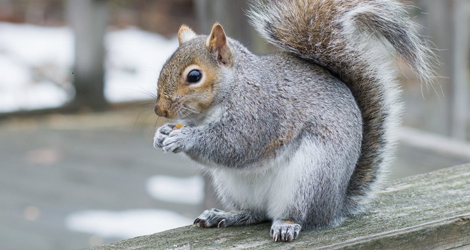
- Eastern grey squirrel, including the black colour form. This is the most common attic squirrel in London. It’s large and strong, and it can chew through soffits and plastic vents.
- Red squirrel. Smaller and very territorial. It often gets into walls and attics through small gaps and stores food inside.
- Flying squirrel. Nocturnal and rarely seen. Flying squirrels often live in groups and get in through tiny gaps along the roof line.
Each species uses different entry points and has a different schedule, which is why a proper inspection comes before any removal.
Why Squirrels in the Attic Need Quick Attention
Squirrels’ teeth never stop growing, so they chew constantly. That leads to:
- Chewed electrical wiring, a real fire risk
- Damaged insulation and ducts from nesting and tunnelling
- Holes in soffits, fascia and roof vents that let in water and other animals
- Droppings and urine that stain ceilings and create odours
- Stored food such as nuts and seeds hidden in walls and attics
The longer squirrels stay, the more entry points they chew and the more damage there is to deal with.
How Our Squirrel Removal Works
1. Inspection. We check the full roof line, vents, soffits, chimney, siding and nearby trees and find the active entry hole and every other gap. Every home is different, so we inspect first and give you an exact quote before any work starts.
2. One-way door. We mount a one-way door over the main entry. Squirrels leave to feed and can’t get back in. There are no poisons, which can leave a dead squirrel in your walls.
3. Baby squirrels. In nesting season we check for young. When babies are present, they’re removed by hand and reunited with the mother, and we check for young before closing the last opening.
4. Sealing. Once the squirrels are out, we seal the main hole and every other potential entry with chew-resistant materials, including roof vents, gable vents, soffit corners, plumbing stacks and gaps where roof lines meet. We seal with chew-proof metal and heavy-gauge screening.
5. Follow-up visit (included). An included follow-up visit, usually about two weeks later, removes the one-way doors once the animals are out and confirms the work is holding. We then close that last opening with chew-proof metal.
6. 5-year guarantee. Our exclusion work comes with a 5-year guarantee: animals won’t get through any of the work we did. The guarantee covers only the entry points we sealed. It doesn’t cover new openings from other causes, such as roof damage or shingles torn off later.
Squirrels in Walls, Chimneys and Soffits
Attics aren’t the only place squirrels nest:
- Walls. Squirrels drop down inside wall cavities from the attic, and you’ll hear scratching at ceiling or wall level. They can get trapped, so we find the access point rather than cutting into walls wherever possible.
- Soffits and eaves. The hollow space behind aluminum or wood soffits makes a perfect nest. Chewed corners are the giveaway.
- Chimneys. An uncapped chimney is an easy way in, and squirrels often fall down onto the damper. We remove them and install a cap.
- Garages and sheds. Gaps at the roof line or around garage doors let squirrels store food and nest inside.
- Commercial buildings. Flat roofs, rooftop units and parapets have many gaps. We handle squirrel exclusion for London businesses too.
Squirrel Nesting Season in London
Squirrels can have two litters a year:
- Late winter to spring (February–May): the first litter is born, and attic calls peak.
- Late summer (July–September): a second litter is common, especially for grey squirrels.
- Fall and winter: squirrels look for warm, dry shelter and food storage, and many move into attics when the weather turns cold.
If you hear squirrels during either nesting season, assume young may be present.
Why Not Trap Squirrels?
Trapping catches individual squirrels but leaves the hole open for the next one, and London has no shortage of squirrels. It can also leave babies stranded inside. Under Ontario rules, a live-captured animal generally has to be released within one kilometre of where it was caught, so a trapped squirrel is often back within a day. Exclusion and sealing solve the problem permanently.
How to Squirrel-Proof Your Home
- Trim tree branches back from the roof.
- Cover roof vents, plumbing stacks and gable vents with steel screening.
- Install a chimney cap.
- Fix loose soffits, fascia and roof corners.
- Keep bird feeders away from the house, since they draw squirrels close.
- Check the roof line in spring and fall for fresh chew marks.
What to Do Until We Arrive
- Don’t seal the hole yourself while squirrels or babies may be inside. They’ll chew a new hole or die in the wall.
- Don’t use poison. A squirrel that dies inside the walls causes a strong odour for weeks.
- Keep the attic hatch closed and pets away from the area.
- Note when you hear activity. It helps us identify the species.
How Much Does Squirrel Removal Cost in London?
Most wildlife removal jobs in London cost about $700 to $2,000+, plus HST, and a typical squirrel job falls within that range. Exclusion work usually starts around $700, and very small jobs can cost less. Large homes that need feces clean-up and extensive exclusion work commonly reach $1,500 to $2,000 or more. Every home is different, so we inspect first and give you an exact quote before any work starts.
What changes the price of a squirrel job:
- Number of entry points, from one chewed vent to a whole roof line
- Roof height and pitch
- Babies present in spring or late summer
- Materials, since chew-proof metal on vents, soffits and stacks lasts longer
- Attic clean-up of nesting material and droppings, if needed
The price includes the follow-up visit to remove the one-way doors, and the sealing work is backed by our 5-year guarantee on the entry points we seal. See the full price guide: Wildlife Removal Cost in London.
Squirrel Removal Across London, Ontario
We serve homes and businesses throughout the City of London, Ontario, including Byron, Masonville, Hyde Park, Lambeth, Old North, Old South, Westmount, Wortley Village, Oakridge, White Oaks and Argyle. We work within London only. Not sure if we cover your street? Call 226-271-5510, Monday to Friday, 8:30 a.m. to 5 p.m.
Why Choose London Wildlife?
- Locally owned London company
- Humane one-way exclusion, with no poisons
- Accurate estimates
- Thorough sealing of every entry point
- Post-service inspection and follow-up
- Homes and businesses
- 5+ years in business
- 5-year guarantee on the entry points we seal
- Follow-up visit included in the price
Squirrel Removal FAQs
What kinds of squirrels get into homes in London, Ontario?
The most common is the eastern grey squirrel, including the black colour form, followed by red squirrels. Flying squirrels also get into London attics but are rarely seen because they’re active at night. All three will nest in attics, soffits and walls.
When are squirrels most likely to move into an attic?
Squirrels move into attics most often in late winter and spring to have their first litter, and again in late summer and fall for a second litter and winter shelter. Cold weather pushes them indoors.
Why should I deal with squirrels in the attic quickly?
Squirrels chew constantly. They can damage wood, insulation, vents and electrical wiring, and chewed wiring is a fire hazard. The longer they stay, the more holes they make and the more mess they leave.
How are squirrels removed humanely?
We install a one-way door over the main entry point so squirrels can leave to feed but can’t get back in. Babies are removed by hand and given back to the mother. Once the attic is empty, we seal the remaining entry points.
How long does squirrel removal take?
Most squirrels leave through a one-way door within a day or two. We come back for the included follow-up visit, usually about two weeks later, to confirm there’s no more activity, remove the door and seal the last opening. Jobs with babies take longer.
Will squirrels come back after removal?
Not through sealed openings. Squirrels return when entry points are left open or a new weak spot is chewed. We seal the main hole and other vulnerable areas with chew-resistant materials. Our 5-year guarantee covers the entry points we seal.
How much does squirrel removal cost in London, Ontario?
Most wildlife removal jobs in London cost about $700 to $2,000+, plus HST, and a typical squirrel job falls within that range. Very small jobs can cost less, and large homes that need clean-up and extensive exclusion work can cost more. Every home is different, so we inspect first and give you an exact quote.
Can I just close the hole myself?
Not while squirrels are inside. A trapped squirrel will chew a new hole, often into the living space, and babies left behind can die in the attic. The hole should only be sealed after a one-way door confirms the attic is empty.
Do squirrels carry diseases?
Squirrels rarely spread disease to people, but their droppings and urine can contaminate insulation, and they can carry fleas and mites. The bigger risk is damage, especially chewed wiring. Avoid handling squirrels, and wear protection near droppings.
Book Squirrel Removal in London
Hearing scurrying in the ceiling? Call London Wildlife at 226-271-5510 or request a quote online. We’ll get the squirrels out humanely and seal your home.